< !DOCTYPE html PUBLIC "-//W3C//DTD XHTML 1.0 Strict//EN" "http://www.w3.org/TR/xhtml1/DTD/xhtml1-strict.dtd">

This page has moved to a new address.

< $BlogTitle$>

Friday, December 16, 2011

Person(a) of the Year


Although the selection of a persona or group based identification rather than a specific individual is not a new development for TIME; this year's selection of "The Protester" points toward intriguing new developments in the dynamics of global publics. TIME Magazine’s selection criterion is rather simple; the award goes to that person, group, or concept which most influenced the news, for better or for worse.

Why “The Protester”? Why not the singular Tunisian fruit vendor; the spark that spurred a fire that would rapidly proceed to engulf the globe; from the favelas of the south to the arctic blasted Russian metropolises, and the most developed countries in the world? Why not choose even a specific group of protesters, “The Arab Spring” or the #OWS movements?
Here’s portion of TIME Magazine’s defense of their selection: 
Everywhere this year, people have complained about the failure of traditional leadership and the fecklessness of institutions. Politicians cannot look beyond the next election, and they refuse to make hard choices. That's one reason we did not select an individual this year. But leadership has come from the bottom of the pyramid, not the top. For capturing and highlighting a global sense of restless promise, for upending   governments and conventional wisdom,  for combining the oldest of techniques with the newest of technologies to shine a light on human dignity and, finally, for steering the planet on a more democratic though sometimes more dangerous path for the 21st century, the Protester is TIME's 2011 Person of the Year.

News by definition is generated from controversy. News is a form of protest against the status quo; it pokes holes in the previously seamless fabric of the present. In re-presenting the facts of what has occurred the news defies expectations of what we thought was occurring. But news is also analysis, opinion, and commentary on how we should relate ourselves to new developments; as they emerge in real-time. News even offers analysis on the news. And other media offer analysis on the analysis of the analysis. Entertainment, factual presentation, commentary and opinion become ever blurred in the era of Meta-news. Yet the news has also donned the mask of the figure of the “The Protester” in response to the “The Protester” itself, in its myriad forms.

The Person of the Year is not decided based on extracting data from algorithms or trends from complex metrics. TIME’s award is an analysis by the media of the media, but while it claims to be simply representing the facts of the case, should this award not be the most obvious of decisions? Shouldn’t the answer be staring us straight in the face? TIME doesn’t seem to even feign some sort of claim to objectivity or very rigorously stress the differences between the runner-up’s and the winner. The selection process is based on perceptions, and like all perceptions, from the very beginning it is an act of valuation.
Developments in Cognitive Psychology and Neurophilosophy have demonstrably proven the inability to maintain a distinction between fact and value. At the most basic level of the visual cortex (V1), before one is even conscious of a visual sense perception, feedback loops of higher order thinking processes have already influenced the act of perception. Sober, rational deliberation that’s freed from all extraneous influence vanishes, always trailing in the wake of precognitive, emotional valences.

And in a sense, TIME Magazine is all too aware of this phenomenon. In the penultimate statement defending their decision, TIME reflects on the affective capacities that “The Protester” generated:

For capturing and highlighting a global sense of restless promise

The criterion for selection is fundamentally based on the influence a person/group/concept has had on the media. The reason “The Protester” was so influential was because it fostered the conditions of possibility that connected, created and fed unpredictable desires. There was something else at work in the figure of “The Protester” this year. The figure itself always already was a figure that embodied influence. In a sense every TIME Magazine Person of the Year recipient embodies the figure of “The Protester” in one-way or another.
In the immediate wake of the revolts experts, theorists and scholars scrambled to try and explain why predictive models and theoretical frames failed so miserably to foresee such a drastic upheaval. The events that we are witnessing can only be traced to one sort of cause, the final cause, in an Aristotelian sense. The TIME article relates the figure of “The Protester” to the etymological origin of democracy or demos. All of these movements are ‘caused’ in the sense that they fulfill the meaning and strive to satisfy the end of the demos.

But there are also very specific figures that are emblematic of “The Protester.” There is the Tunisian Fruit Vendor, the romanticized figure of self-sacrifice and ineffable defiance of conventional wisdom. There are the #OWS protesters, the leaderless and organic network of protesters, but a more contentious figure, admired, mockupied and demonized all at once. Within the Occupy Wall ST. Movement the most famous representatives are the victims; the NW Grandma and UC Students Pepper-sprayed, the Iraqi War Veteran whose skull was fractured by Oakland Policy with a tear gas canister, or countless others who were subjected to police brutality.
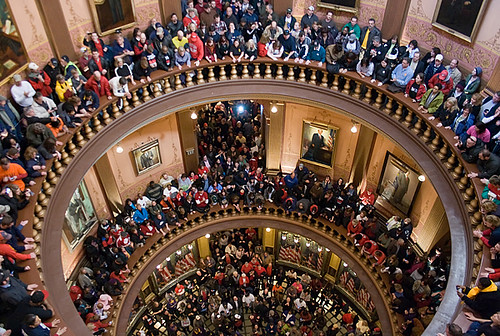
I posted during the first few months of the #OWS protests about the statistical connection between acts of police repression and media coverage of the protests. There was a significant positive correlation between instances of state violence and the amount of media traffic consumed by global publics; thus its no surprise that the most well known figures are the victims.
    
    Yet TIME Magazine repeatedly insists on the fact that this revolution was not linearly caused by advances in technology:


Technology mattered, but this was not a technological revolution. Social networks did not cause these movements, but they kept them alive and connected. Technology allowed us to watch, and it spread the virus of protest, but this was not a wired revolution; it was a human one, of hearts and minds, the oldest technology of all.

But perhaps the human heart itself has changed. What if our affective sensibilities have grown drastically? The article explicitly asks the question:

Is there a global tipping point for frustration?

To me the more interesting question is not whether there is a tipping point or brink in terms of the numbers of people that have to be frustrated before general sentiment translates into action; or whether there is a brink in terms of how pissed people have to get before an emotion becomes an occupation.  Instead, what if technological prosthesis expands our collective affective horizon of possibility? Or if there were a brink, what if it were not fixed or timeless? What if we could actively work on finding ways to lower or raise its threshold? Or return to a more ancient education of the sense? In so many ways (that need not be repeated here) the sources and levels of frustration within the varying contexts (from #OWS to the Arab Spring, to Russia and Greece) differed dramatically, yet tactics by the different groups were remarkably similar. This movement emerged from and continues to generate a social imaginary; an envisioning that feeds forwards and backwards through the public , other movements and the prefigured present; like an electric charge. The bonds of solidarity sedimented through millions of bytes in the bucket spurred passionate attachments to the trajectories of other protesters and movements. The interconnectedness of the movements provided an infrastructural base that would outpace its wildest dreams.

The movements combine:

the oldest of techniques with the newest of technologies to shine a light on human dignity

What if the newest of technologies is really just as ancient of principle? Are the technologies, as they disclose themselves in their many-sided mystery not the tools enabling one to take to the task of generating an ethos? Can we not think of ethos as a technique as well as a technology?

A technique of the self;
A prosthetically enhanced capacity to respond;
An augmented duty to own up to one’s ownmost potentiality for respons(e)ibility. 


Labels: , , , , , , , , , , , , , ,

Saturday, December 3, 2011

Rumi or Sue Me


The nafs is a sea of calm until it roars. The nafs is a Hell that radiates little heat. The nafs is an ankle-deep river you drown in. Better to be ignorant of worldly concerns, better to be mad and flee from self-interest, better to drink poison and spill the water of life, better to revile those who praise you, and lend both the capital and the interest to the poor, forgo safety and make a home in danger. Sacrifice your reputation and become notorious. I have tried caution and forethought; from now on I will make myself mad.
-Rumi


The nafs is to be understood in a similar light as Cartesian ego cogito, the transcendental subject of reason,  or the immature, bounded subject of the Enlightenment. For Rumi the uncanny contradictions of faith in concepts rendered mythical breeds a forgotten and forlorn mood; externalizing self-reflexivity onto the certainty of identity of the self with its conceptual apparatus deflates and depletes being of its creative capacity for poesis.

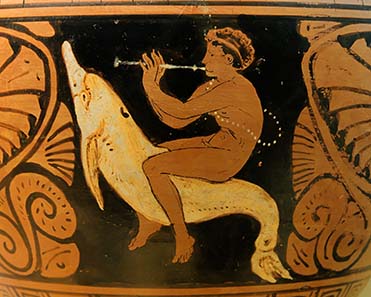
Yet, the situation isn't completely overdetermined by the drudges of despair; one may always flee from the imposed order of an alien selfhood, take a topsy-turvy turn, deciding without judgment between madness disclosed as melancholy or the mayhem delivered as a melody. A melody completely unknown to the Athenian flute player of Aristotelian teleology, or the Corp of Drums when the sun refused to set on the British Empire and composed of barely beyond boyhood drummers, learning and giving the orders of warfare, where comprehension of the threshold of play, when the drum beat's dance between wooden member and raw hide head ceases to play but becomes an unthought extension of a heart stuck in the violent oscillations of a warrior resonance.


Labels: , , , , , , , , , , , , ,

Tuesday, February 22, 2011

Droppin' Nussbaums

Nussbaum’s analysis of Aristotle is insightful yet ironic. If it is true that “in avoiding emotion, one avoids a part of the truth”(317), why does Nussbaum come off so disembodied and dry in her writing style? Why does she simply present her reading of Aristotle in the typical academic form, yoked by the same enlightened criteria she’s attempting to sublate? Nikidion could very well be a robot with different emotional states which react to various programmed inputs and outputs for all I know based on her description.

If “philosophy is not self-sufficient as a shaper of souls” one can’t simply point to the aporia or gap and acknowledge its existence, rather it must be made manifest. Perhaps, the emotional tone of the excerpt is just the appropriate one given the academic context, or is this simply a rationalization? Nussbaum points to something like ‘structures of feeling’ or what Bourdieu would have referred to as the ‘habitus’ that mold the ways we react to a given stimuli or phenomenon; if her intention is to shift this should she not act in a way that moves beyond it? Changing the conceptual ideals and cognitive interpretation of Aristotle alone falls short according to her own account of the relationship between philosophy and feeling. With all of the work currently being done on affect studies and new materialism you’d think she’d hop on the train, perhaps with William Connolly, Ben Anderson, and Jane Bennett.

In order to break out of the confines of the current theoretical dispotif shouldn’t we experiment with new ways of relating to academic labor itself? Not some new idealism or fantasy of freedom, but rather an embrace of the lived materiality of comporting oneself to their life-activity of knowledge production. If the point of Nussbaum’s criticism is that a representational form of philosophy will not suffice, than the critic should let this feeling flow through their thought itself. To learn to affect and be affected suggests becoming attendant to the subtleties, intensities, and rhythms of thinking. A loosening of the ideological shackles, a withering of conceptual blockages, and a fomenting of forces that seem hardly perceptible to the naked eye. Nussbaum is still stuck within the theoretical methodology of Aristotle that we can truly come to know the nature of emotive impulses. She constantly chides characterizations of emotions as “mindless surges of affect” (311). While it is true that affective reactions are forms of judgment and discernment implying value commitments, it does not follow that the “rich cognitive structure” then becomes completely intelligible. Nor does it follow that we can comprehensively list the way particular emotional feelings arise, as if they were clearly defined states.

She points to the ways in which Aristotle gave a qualitatively different analysis of Anger and Pity based on the use of the Greek prepositions ek and epi, but is there not a larger question at issue here? Beyond Aristotle making a distinction by manipulating grammar, could we not also look to the ways in which our structures of feeling are themselves manipulated by grammar? It could be argued that part of the difference between modern and ancient ideas of anger could be imbedded within the differences in linguistic structures we use. In the ancient example, the preposition ek is used to describe a pain which comes out of a belief of impending evils, rather than epi which is a feeling directed at a pain someone else is experiencing. Today it seems that we direct our anger at structures, people, or a general state of things. Or perhaps the translation is fundamentally just incomplete and unable to grasp the difference.

Labels: , , , , , ,

Monday, February 7, 2011

Feelin' Aristotelian: Rhetoric: Book 2 Chapters 12-26


If Aristotle is right when he claims, “When we know a thing, and have decided about it, there is no further use in speaking about it,” (II, viii, 1391b 7-9) then why is he still speaking? Perhaps it has to do with “the manner and means of investing speeches with moral character.” (II, xviii, 1391b 22-3) Aristotle’s overarching piece is to find out what moves a particular audience and cater to it. It is generally easier to play on the particular types of resonances that audience members hold and latch on to them, than to inaugurate an entire new world view. Crafting a moving speech does not entail creating new frames or associations, but modifying already held dispositions to fit the case at hand. Aristotle writes, “The orator has therefore to guess the subjects on which his hearers really hold views already, and what those views are, and then must express, as general truths, these same views on these same subjects.” (II, xxi, 1395b 10-12) Aristotle appears to have little faith in a particular rhetor’s ability to challenge an audience’s assumptions, rather they must appeal to already existing cultural values or modes of reasoning in order to gain ground.
Aristotle doesn’t make a claim about the origin of language or its nature overall, i.e. that language exists allegorically, or is structured fundamentally by metaphors or tropes. But he does elaborate the ways in which these devices serve pragmatic purposes. Aristotle further makes no distinction here between writing and speech, or do justice to the performative aspects of speaking. Yet he does apply the general framework of philosophy to language, he writes
In discussing deliberative oratory we have spoken about the relative greatness of various goods, and about the greater and lesser in general. Since therefore in each type of oratory the object under discussion is some kind of good – whether it is utility, nobleness, or justice – it is clear that every orator must obtain the materials of amplification through these channels (II, xix, 1393a 11-15).
What are these “materials of amplification” (II, xix, 1393a 11-15)? Is there an overlap between Aristotle’s metaphysics and his theorization of linguistic laws? For example, are the materials with greatest amplifying power the most moderate or virtuous ones? He outlines an entire spectrum of modes of argumentation, in what way can we assign different weights to the different methods? He claims that exaggeration and invention are sometimes necessary, couldn’t that also imply it is always-already happening?
Aristotle however would prefer not to dive too deep into these waters; “To go further than this, and try to establish abstract laws of greatness and superiority, is to argue without an object; in practical life, particular kinds count more than generalizations” (II, xix, 1393a, 15-18).
On the other hand, when he speaks to the types of uses of ‘Example’ he does differentiate between “the mention of actual past facts” and “the invention of facts by the speaker” (II, xx, 1393a 27-8). He reproaches Socrates for having deployed the latter form, through the use of ‘illustrative parallel.’ He also indicates that fables are more useful when speaking to popular assemblies. The reasoning behind this claim is two fold; 1) The Rhapsode, the poet, and drama were the primary modes of education for the majority of ancient Greeks, learning through narratives or story is thus what these people would be disposed towards and 2) given a larger group of people it would be more practical to deploy a fictional example if not everyone is familiar with the facts. Furthermore, perhaps the use of fables has the power to create a distance between our preconceived notions and the argument at hand. The way that they become abstracted, Aristotle gives an example of a story with animals for characters, forces disconnection. One has to see the whole story in order to see the moral arise and then apply it to the example at hand. A rhetor would pick a relatively narrow fable in which the moral of the story can only be applied to the case in a way that appeals to their larger argument.
If it is a narrative that possesses more cultural import it can be more amplifying to an argument, i.e. the way the left appeals to the ‘nation of immigrants’ narrative to pass visa policy reform. Grand claims about the historical origin of the U.S. can force people to think outside of the confines of the present position they’re in. In the U.S. this can be a very powerful tool, since the story of the founding of the nation can evoke waves of pride and nostalgia. I think that this example problematizes Aristotle’s division of speech types and their correlative appeal type, “that concerned with Amplification is…most appropriate to ceremonial speeches; that concerned with the Past, to forensic speeches;…that concerned with Possibility and the Future, to political speeches” (II, xviii, 1392a 4-7). Perhaps also the line between actual and invented facts should be exposed as arbitrary in many cases. While there may be a real distinction between what we know is a fact and what is not, there is no actual difference when it comes to the way we relate different facts to one another in a speech. The way historical facts are weaved together within narratives shifts the value that facts possess based on context et al. 

Labels: ,

Monday, January 31, 2011

Fear Factor

In Chapter 5 Aristotle gives us a definition of fear as “Fear may be defined as a pain or disturbance due to a mental picture of some destructive or painful evil in the future.” (1382) This definition however seems limiting and far too rational for such an unpalatable feeling. Do we not also fear the reliving of certain memories, fear talking about what has happened to us in the past, or expressing certain things to people? One might say well that’s because it will bring you pain in the present, but is it pain in the destructive sense Aristotle is speaking of? Do we not also fear things that may bring us pleasure? What about people who fear public speaking? They know that if they do well that it will bring them a reward, it is not as if the act itself is painful but just the potential reaction of certain people.

Aristotle also continues on to say that we fear things “only if they appear not remote but so near as to be imminent.” (1382) This might make sense in the abstract but what about the fear of nuclear weapons, a terrorist biochemical attack, or China invading? Are these not real fears with particular objects that exist in people’s minds although they are remote? But perhaps Aristotle’s point is not that the thing we fear itself is imminent that makes us fear it, but rather the ability for it to be felt as such. Then again Aristotle continues to say “Of those we have wronged, and of our enemies or rivals, it is not the passionate and outspoken whom we have to fear, but the quiet, dissembling, unscrupulous; since we never know when they are upon us, we can never be sure they are at a safe distance.” [1382b] The element of not knowing whether something is to be feared or not is able to provoke fear itself. Is this fear? It has some elements of particularity in reference to a certain person and a certain act they might do, what makes it frightful is the uncertainty surrounding whether or not it will occur. Perhaps this is just an example of anxiety rather than fear? But where do we draw the line?

This inability to distinguish where certain feelings begin and others end points to a larger criticism I have of Aristotle in Book II. He posits emotions such as fear and confidence and friendliness and enmity etc.. as directly opposing one another. But not just are the emotions antithetical to one another such as anger and calm, he claims that they are mutually exclusive. I would contend that there is no such thing as being within a pure state of an emotion. Or that emotions are even a state as such. Rather they are always mixed, always flowing into and out of one another. The OED’s definition of emotion includes ‘a moving out or migration.’ Emotions are not something which are possessed one second and dispensed with another but occur as processual encounters and with varying intensities.


Aristotle writes [in reference to fear ] “People do not believe this when they are, or think they are, in the midst of great prosperity” [1383a] Yet when people are feeling pleasure from their prosperity do they not also develop a sense of paranoia and fear that someone will try to take them down a notch? Sometimes we want to feel angry at a person, not because they represent a real threat to us but because we gain a sense of pleasure out of it. Yet Aristotle writes of anger as necessarily painful. It seems difficult to reconcile these inconsistencies.

Labels: , , , ,